Fasting: Is It Right for You?
An optional meal-timing approach—not a requirement for better health.
Going without calories for a set period changes how your body uses available fuel. Some adults find a shorter eating window practical, while others feel and function better with regular meals. There is no single fasting schedule that suits everyone.
Ask a qualified clinician before fasting if you are pregnant or breastfeeding, under 18, underweight or frail, have diabetes or an eating-disorder history, or take medicines affected by food intake or blood-glucose changes.
Learn MoreUnderstand the Process • Avoid the Hype
Fasting, Explained Simply
Fasting is a planned period without caloric food or drinks. As time passes, your body adjusts how it uses available and stored fuel. The timing and size of these changes vary with your last meal, activity, health, medicines, and the length of the fast.
↔️ Fuel Use Changes GraduallyBetween meals, insulin generally falls and stored glycogen contributes energy. With longer food restriction, fat use and ketone production may increase. This is a continuum, not an on-off switch. |
🔬 Autophagy Has No Proven ClockAutophagy is a normal cellular recycling process. Food restriction affects related pathways in laboratory and animal studies, but human research does not establish a universal hour when autophagy “starts,” peaks, or produces a specific health benefit. |
🕰️ Shorter Patterns Are Still OptionalA consistent overnight eating break or a time-restricted eating schedule can suit some adults. Fasting is not required for health or fat loss, and it should not prevent you from meeting your energy and nutrient needs. |
⚕️ Longer Fasts Need More CautionGoing 24 hours or longer without food is medically significant. Fast lengths of 36–72 hours should not be presented as a routine progression. Risks depend on your health and can include dehydration, low blood pressure, medication problems, low blood glucose, and difficulty restarting food safely. |
There is no prize for fasting longer. If you choose to fast, use the least restrictive pattern that supports your health and daily life.
Clear Terms • Practical Care
During and After a Fast
“Clean fasting” is popular language, not a scientific category. For clarity, a zero-calorie fast generally means avoiding caloric foods and drinks for the chosen period.
🥤 During a Zero-Calorie FastWater is the simplest choice. Plain unsweetened tea or black coffee are also commonly included, although caffeine may not suit everyone. Electrolyte products vary. Check the ingredients, and ask a clinician before increasing sodium or potassium if you have kidney, heart, or blood-pressure concerns or take related medicines. |
🥗 Returning to FoodAfter a shorter overnight fast, most people can return to a normal balanced meal. Eat slowly and choose an amount that feels comfortable. After prolonged fasting—or if you are undernourished, have lost substantial weight, or have a medical condition—restarting food can require medical planning because refeeding problems can be serious. |
Bone broth, milk, cream, collagen, MCT oil, butter, and snacks contain calories. They may be part of a modified eating plan, but they are not a zero-calorie fast.
First-food tip: When returning to food, avoid starting with sugar, refined carbs, or a large carb-heavy meal. Begin with something gentle, protein-based, or easy to digest, then add carbohydrates later if they fit your meal.
Individual Needs • Evidence First
Fasting and Your Context
Responses to fasting differ. Sex, age, menstrual status, pregnancy, medicines, health conditions, training, sleep, and total food intake can all affect whether a fasting pattern is appropriate.
Menstrual CyclesResearch does not support a universal day-by-day fasting schedule across the menstrual cycle. If fasting disrupts your period, sleep, mood, energy, training, or ability to eat enough, stop or shorten it and seek qualified guidance. |
Pregnancy and BreastfeedingIntentional fasting can make it harder to meet changing energy, fluid, and nutrient needs. Do not begin a fasting regimen during pregnancy or breastfeeding without guidance from your maternity-care clinician. |
Perimenopause and Older AgeThere is no proven fasting schedule for menopause. Protecting muscle, bone, hydration, and adequate nutrition matters, especially with age or frailty. Research in older adults remains limited. |
Eating-Disorder HistoryFasting can reinforce restrictive or compulsive patterns. If you have a current or previous eating disorder—or fasting creates guilt, anxiety, bingeing, or loss of control—avoid self-directed fasting and seek appropriate support. |
Your body does not need to follow an online fasting calendar. A safe eating pattern should support nourishment, function, and wellbeing.
Safety First • No Pressure
Start Carefully
You do not need to fast. If you are a generally healthy adult who chooses to try it, begin conservatively and pay attention to how it affects your nourishment, symptoms, sleep, mood, and daily function.
|
① Begin Conservatively A roughly 12-hour overnight eating break may be a reasonable first experiment for some adults. Longer is not automatically better. |
② Protect Nutrition During eating periods, focus on enough food, protein, healthy fats, fiber, fluids, vitamins, and minerals. Fasting should not become chronic under-eating. |
③ Stop When Unwell Seek guidance if you develop fainting, confusion, persistent dizziness, marked weakness, vomiting, heart palpitations, or symptoms of low blood glucose. |
Ask a Clinician Before Fasting if
This is especially important if you take insulin, sulfonylureas, blood-pressure medicine, diuretics, or medicine that must be taken with food; have diabetes, kidney or liver disease, gout, low blood pressure, recent major weight loss, or another chronic condition; are pregnant, breastfeeding, under 18, underweight, frail, or an older adult at risk of malnutrition; or have a current or previous eating disorder.
Fasts lasting 24 hours or more deserve added caution. Do not attempt a 36–72-hour fast as a routine self-care challenge. Medical supervision may be appropriate, particularly when medicines, illness, low body weight, or refeeding risk are involved.
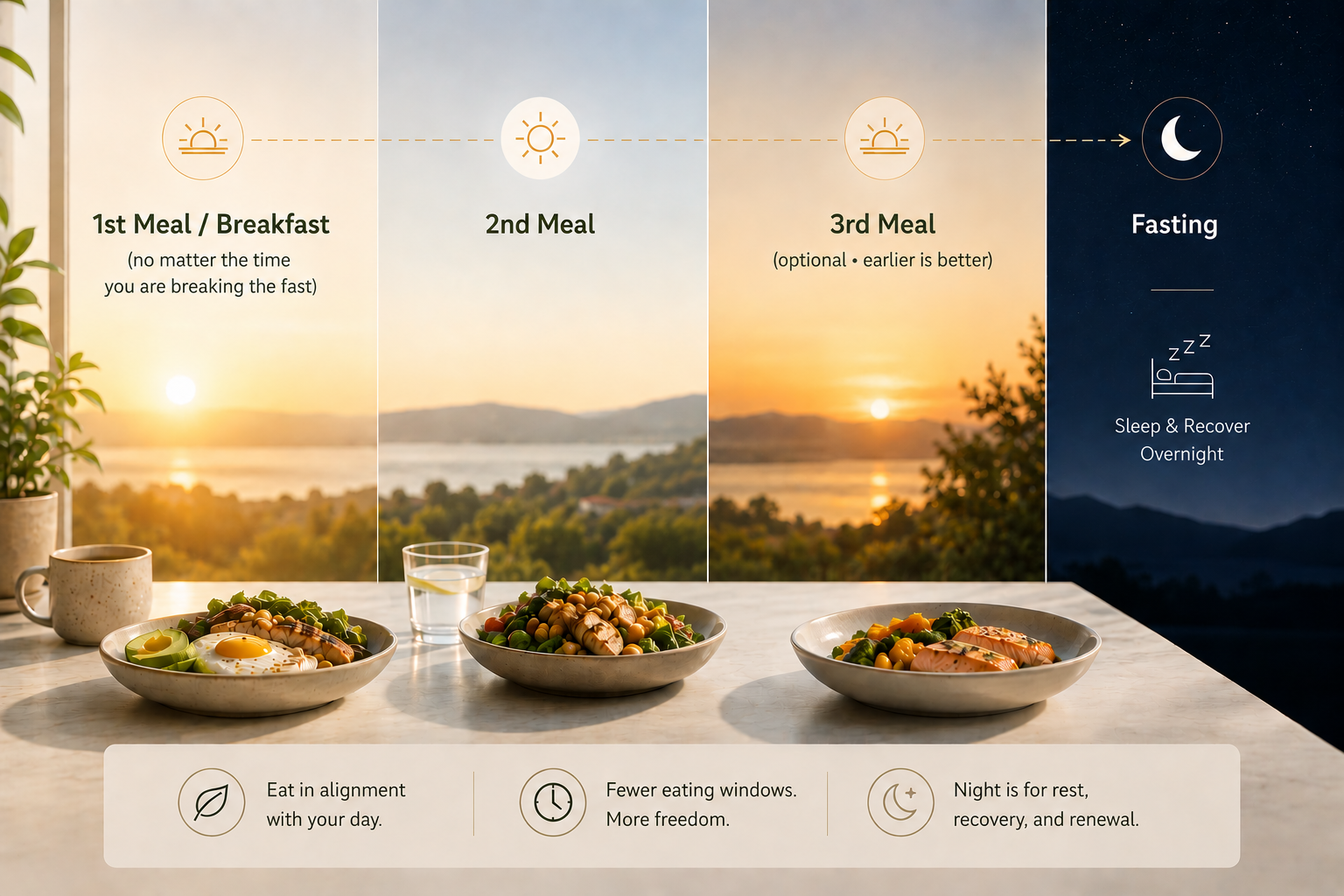
⭐ You do not need to eat all day to keep your body working — focus on meals that keep you satisfied. |

Simple Rhythm • Lasting Energy
Give Your Body Time Between Meals
You do not need to eat all day to keep your body working. A steady meal rhythm can help your body recognize true hunger instead of reacting to every craving for quick fuel, especially sugar or refined carbs.
① Stop Constant GrazingEating every few hours is not required for most healthy adults. Frequent bites can keep the body in a constant fed state, which may make it harder to tell the difference between real hunger and simply wanting something sweet, salty, or comforting. |
② Let Digestion FinishBetween meals, your gut has a natural clean-up rhythm that helps move things along after digestion. Constant snacking can interrupt that quiet reset before the body fully finishes one meal. |
③ Build a Simple RhythmA simple place to begin is to eat nourishing meals, reduce random snacks, and leave a few calm hours between meals when you can. For many people, an overnight eating break is the easiest first step. |
The goal is not to control every hour of your day. The goal is to create a rhythm that helps you feel nourished, steady, and free — with clear time to eat, clear time to rest, and more trust in your body’s natural signals.
Start small. Stay flexible. Eat enough. Rest well. Fasting works best when it supports your life — not when your life becomes built around fasting.


Sources & Evidence
This page uses public-health guidance and peer-reviewed human research. Fasting evidence continues to develop, and results from animal or laboratory studies should not be treated as guaranteed human outcomes.
- NIDDK: Fasting Safely With Diabetes
- National Institute on Aging: Calorie Restriction and Fasting Diets
- Bagherniya et al.: Fasting, Calorie Restriction, and Autophagy
- Pietrocola et al.: Metabolic Effects of Fasting in Human and Mouse Blood
- Varady et al.: Efficacy and Safety of Prolonged Water Fasting
- NICE: Nutrition Support and Refeeding-Risk Recommendations
- BMJ: Intermittent Fasting Strategies and Cardiometabolic Outcomes